

Markedge, a marketing agency website and CMS
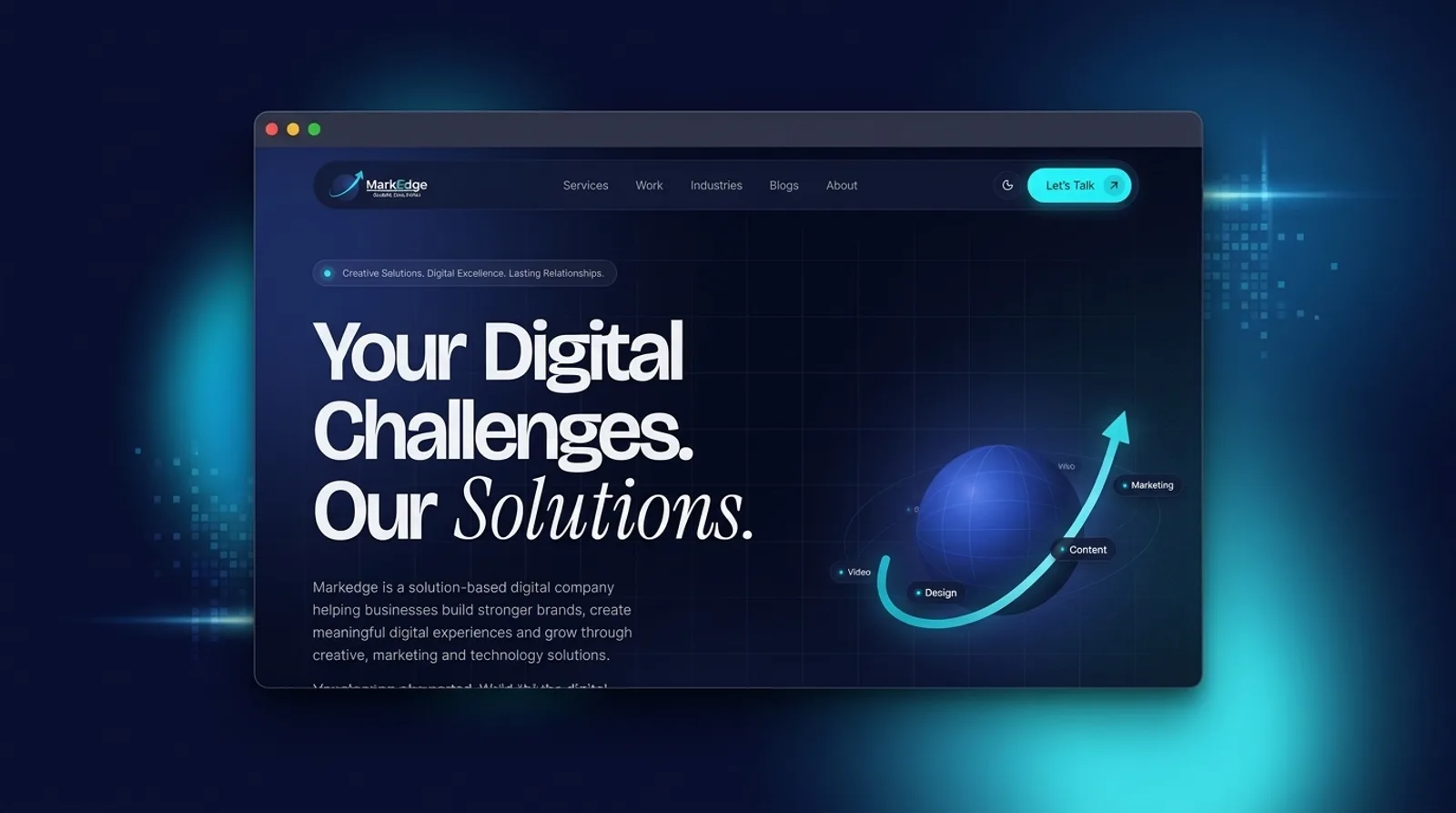
A marketing website for a Kathmandu digital agency, run from a custom admin panel where the team publishes services, case studies, blogs and testimonials themselves.
- Industry
- Marketing & creative
- Type
- Markedge Global Solutions
Business challenge
The challenge
Markedge offers social media, content, video, design, SEO and web services to businesses across Kathmandu. Its work changes every month: new clients, new campaigns, new results to show. Each of those changes had to go through a developer, so the website fell behind the work and couldn't show prospects what the agency was actually doing.
Project objectives
Objectives
- 01Present Markedge's services, industries and approach on a site that matches the brand.
- 02Let the team publish case studies, blogs, testimonials and FAQs without a developer.
- 03Collect enquiries from the website in one place the team can work through.
- 04Keep the site fast and readable for search engines while content changes often.
- 05Deploy the backend automatically to Markedge's own server.
Overview
Markedge Global Solutions is a solution-based digital agency in Kathmandu. Kritiqtech designed and built three connected parts: the public website, the admin panel the Markedge team uses to run it, and the API between them. Visitors see the services, case studies and articles, and the team keeps all of it up to date from the admin panel.
Solution
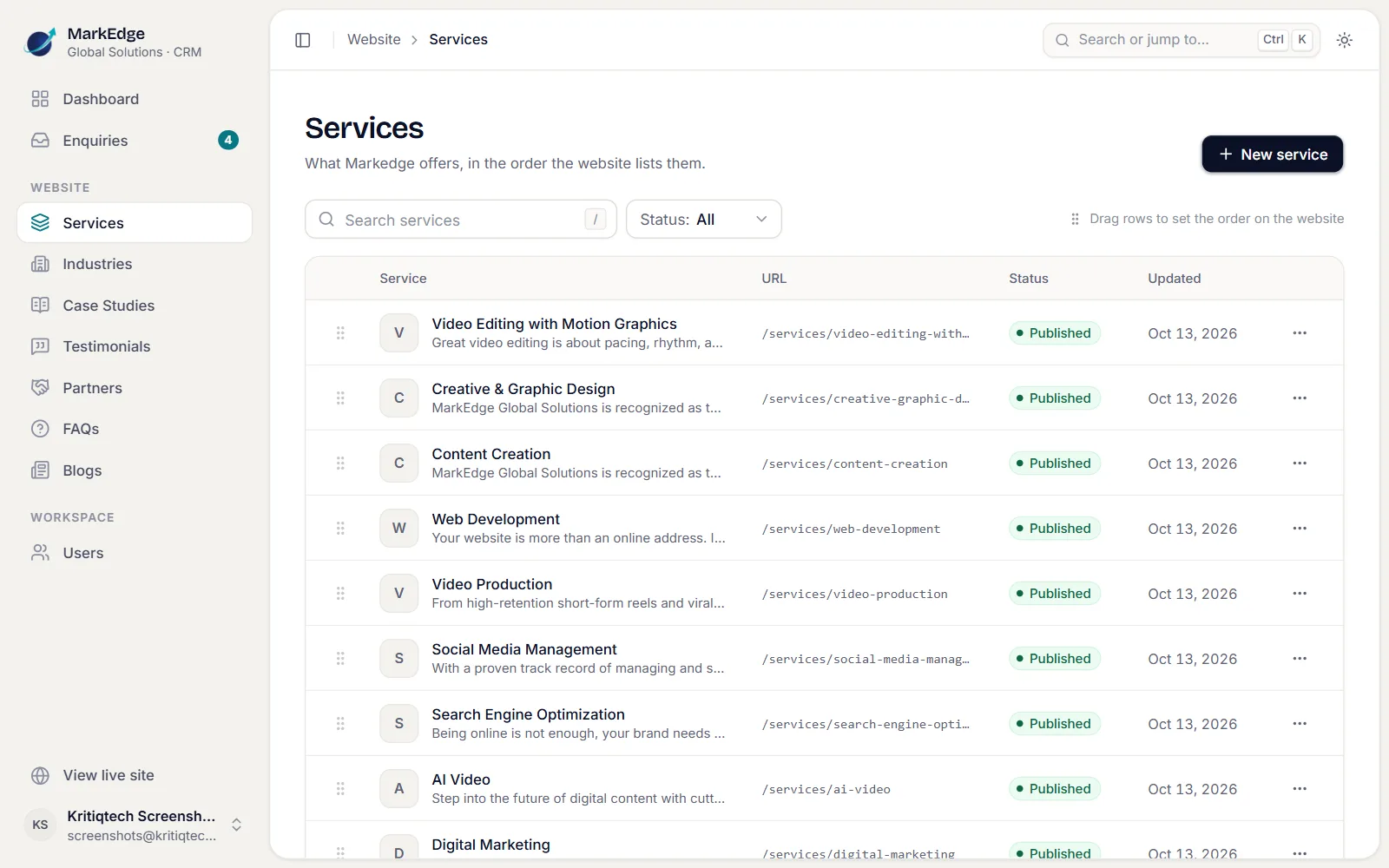
The backend is a FastAPI service on PostgreSQL. It gives every content type the same set of actions: services, industries, case studies, testimonials, partner logos and FAQs can all be listed, created, edited, published or unpublished and drag-and-drop reordered in the same way. We kept it to one pattern so the admin panel stays predictable for the team and new content types are cheap to add. Unpublished items are hidden from visitors but still open for a signed-in editor, so a draft can be previewed on the real page before it goes live. Uploaded images are resized, stripped of location metadata and converted to WebP on the server, so editors can upload photos straight from a phone without slowing the site down.
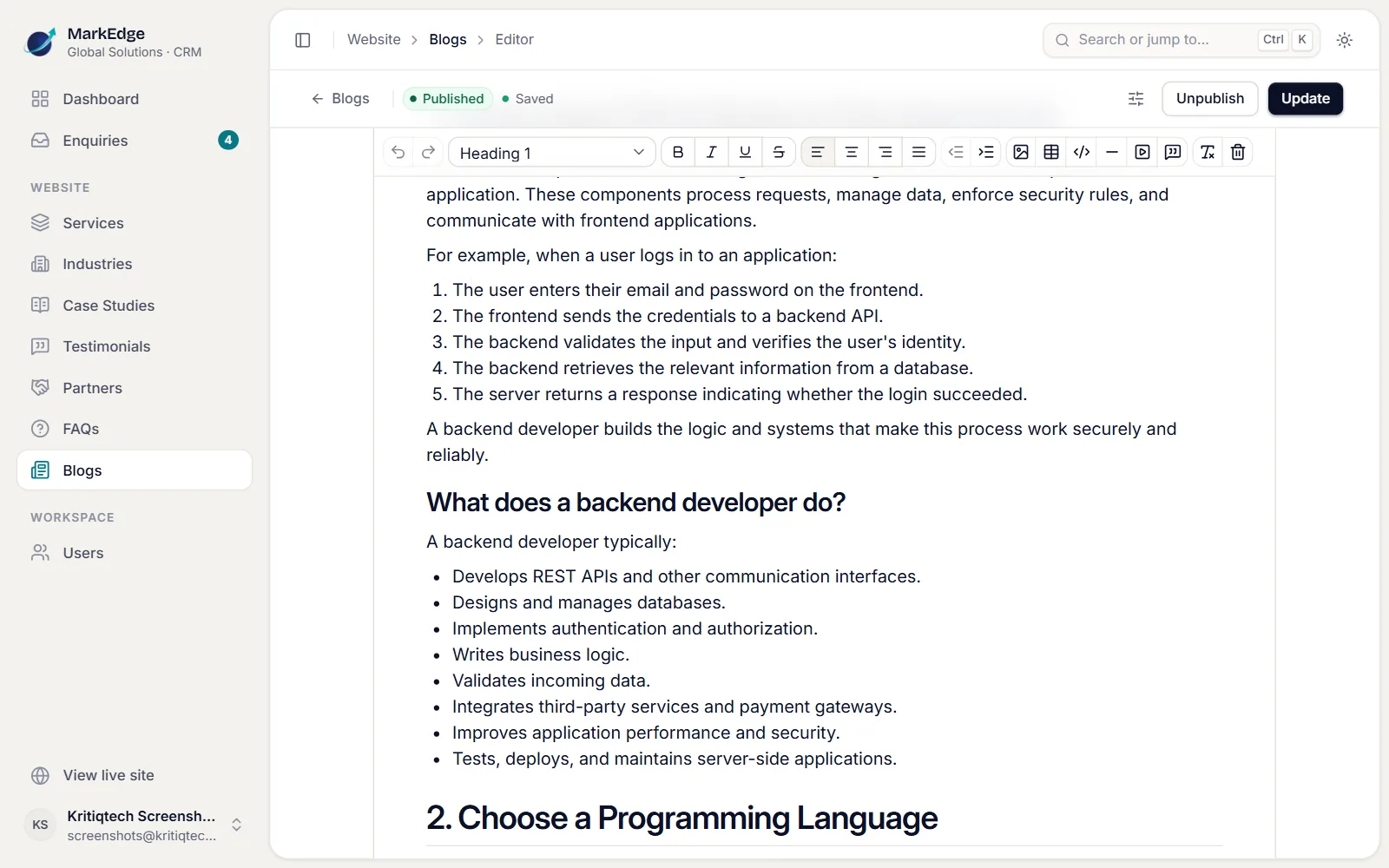
Blogs work differently because a blog is a feed rather than a curated grid. Posts are ordered by publish date and written in a rich-text editor we built on Lexical, with headings, lists, tables, code and embeds. The HTML is sanitised against an allowlist when it is saved, and again on the website before it is shown, so a pasted snippet can't break a page or carry a script.
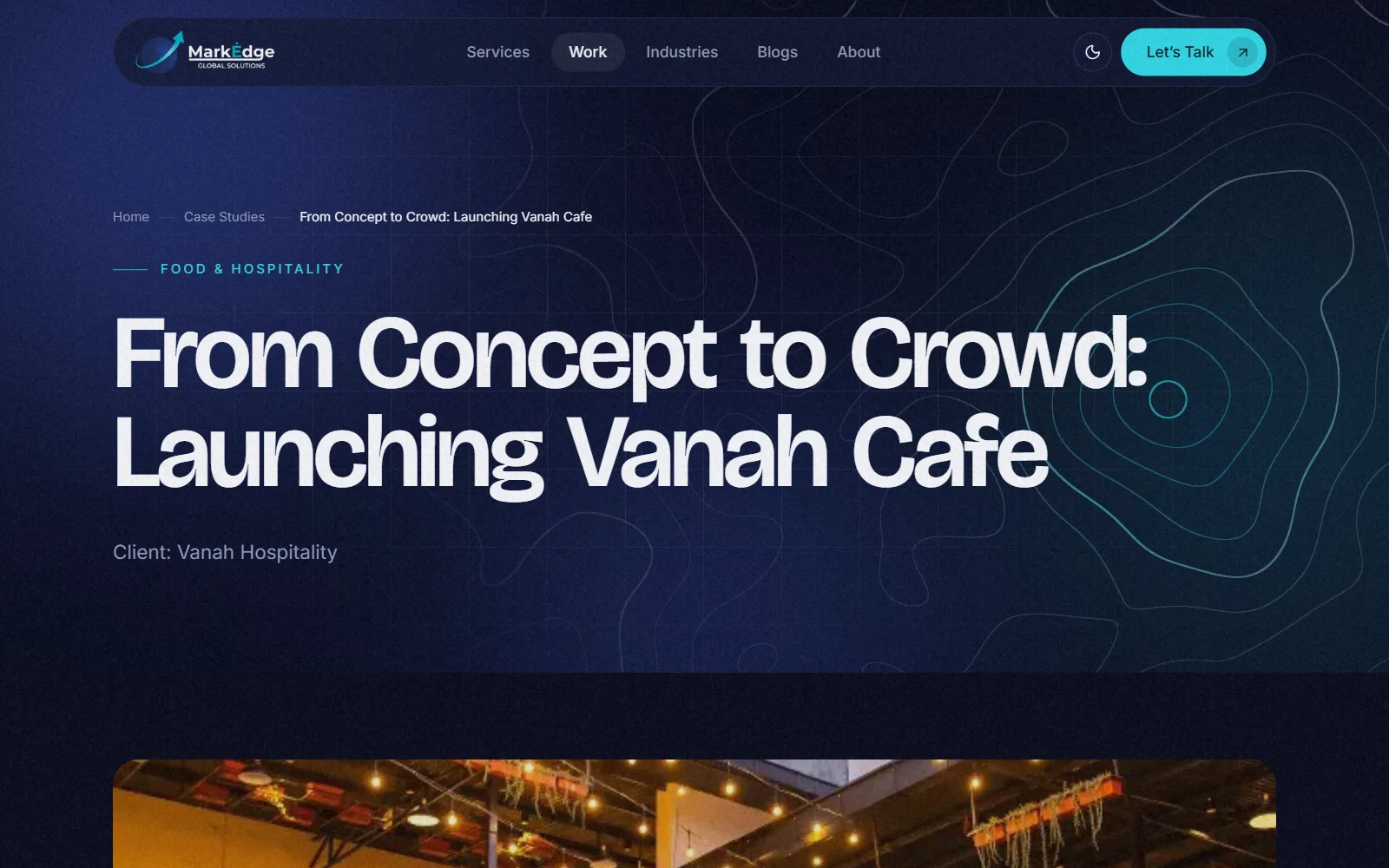
The public website is built with Next.js. Every page is rendered on the server and cached for five minutes, so visitors get static-page speed and the team's changes still show up on their own. When an edit needs to be live at once, a clear-cache page refreshes everything. Contact form submissions go straight to the API and land in an Enquiries inbox in the admin panel. The FAQ and blog pages publish structured data for search engines, and every article has links that open it in ChatGPT, Claude or Perplexity for a summary.
Design approach
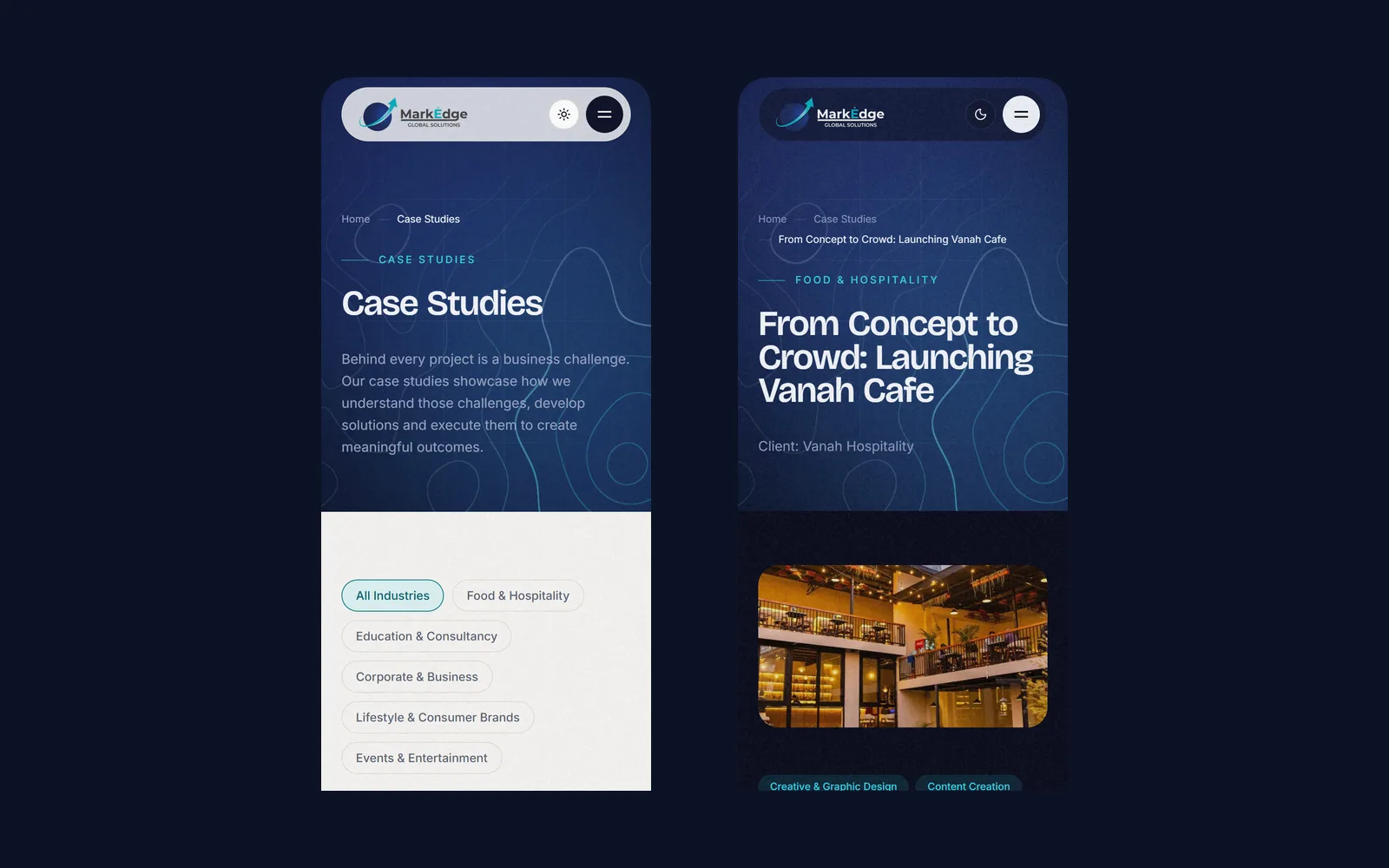
The website has to sell an agency's taste as much as its services, so we built the visuals for this brand rather than starting from a template. There is no stock photography. Sections that would usually need a photo use a hand-built gradient and grain backdrop in Markedge's navy and cyan. Light and dark themes are tuned separately, and the key sections stay navy in both. If something is missing, the site falls back to a matching icon or an initials avatar rather than a broken image. The admin panel is plain on purpose: tables, side sheets and one editor screen, so the people writing content can focus on the words.
Development process
We started from Markedge's content brief and the API specification, and built the backend first so the website and admin panel had a stable contract to work against. The admin panel came next, module by module, then the website. Blogs started with a simple block editor. When the team needed inline formatting and tables, we replaced it with the rich-text editor and moved every existing post across in one migration. The backend has integration tests that run against a real database. Every push to the main branch builds a Docker image and deploys it to Markedge's server behind Cloudflare. Read more about our process.
Technology stack
Built with
Frontend
- Next.js
- React
- TypeScript
- Tailwind CSS
Backend
- Python
- FastAPI
Databases
- PostgreSQL
Cloud & DevOps
- Docker
- CI/CD
Screenshots
Inside the product
Want something like this built?
Tell us about your project and we'll walk you through how we'd approach it.